
Architecting Breakthroughs with the Basics: A Conversation with Marybeth Hays on Retail Innovation

Caitlin Allen
Marybeth Hays has spent her career shaping the future of retail—from starting in brand management to leading merchandising at Walmart (in the US and China), Lowe’s Home Improvement, and Sam’s Club to advising Fortune 500 companies and serving on multiple public and private boards. A global retail strategist and former expat executive, she brings a rare, holistic perspective on how brands, retailers, and consumers evolve together.
Today, as a member of Simbe’s Strategic Advisory Board, Marybeth continues to influence how technology, data, and leadership intersect to build stronger, more customer-centric retail organizations. In our conversation, she reflects on the fundamentals of great retail, how digitizing the shelf can unlock new value, and why she believes the next decade will redefine what it means to shop.

Caitlin Allen
SVP, Market
Caitlin Allen is SVP of Market at Simbe, where she leads brand, communications, and commercial strategy, and chairs Simbe's Strategic Advisory Board. She brings almost 20 years of experience scaling market-defining technologies from startup to IPO, including senior marketing roles at Lyft, Happy Returns, and Andreessen Horowitz.
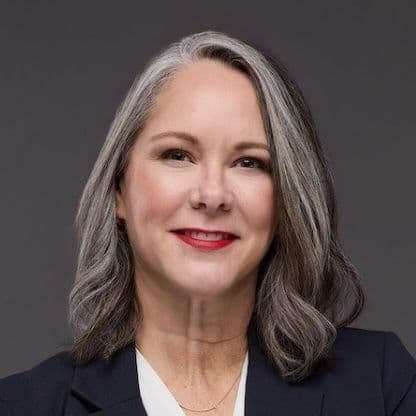
“Shelf digitization is a retail merchant’s nirvana.”
Q (Caitlin): You’ve led across merchandising, marketing, and supply chain at some of the world’s biggest retailers. What experiences most shaped how you think about leadership in retail?
A (Marybeth): I started on the supplier side with Hanesbrands and then moved into retail, which I absolutely loved. They’re different worlds, but complementary, you learn to speak both languages.
What I came to believe is that leadership in retail is really about paving the way for your teams to do the right thing for the customer. Sometimes that means going to bat for capital (lighting, fixtures, signage) whatever helps the store serve customers better.
“And above all, never get bored with the basics. You buy stuff, ship stuff, sell stuff, and if you lose sight of any of that, it doesn’t matter how fancy the rest is.”
Q: You’ve said before that retail means attention to detail. How has that belief carried through your global experiences, like your time leading Walmart China?
A (Marybeth): Being an expat changes you fundamentally. Living in another culture opens your brain and teaches you humility.
In China, I learned the importance of meeting the customer where they are. For example, I kept wondering why Sprite kept showing up near wine and I learned that it’s because many shoppers there mix the two. Once we understood that, we built new assortments like wine glasses, complete with signage explaining which glass goes with which wine.
You have to check your assumptions and slow down. Culture will eat strategy every day.
Q: What are the throughlines you’ve seen across markets when it comes to building durable, customer-focused retail businesses?
A (Marybeth): The fundamentals don’t change. You’ve got to be nearly perfect on in-stock for your high-velocity items; 99.9% isn’t an exaggeration. Then, offer a thoughtful good-better-best range with clear value propositions. Finally, keep testing. Consumers love newness. The best merchants take smart risks, they have failures because they’re trying things. When my merchants didn’t have at least one “disaster” a year, I knew they weren’t pushing hard enough.
Q: How do you see consumer preferences evolving today compared to earlier eras?
A (Marybeth): We’ve moved from the era of the brands, to the era of the big retailers, to what I call the era of the consumer, and it’s only intensifying.
Consumers now expect transparency about ingredients, sourcing, and sustainability. Apps like Yuka let shoppers instantly scan and evaluate what they’re buying. That’s a seismic shift in power. It’s not retailers or brands dictating anymore, consumers are leading the way.
Q: What excites you about the digitization of the shelf and the concept of shelf intelligence?
A (Marybeth):
"Shelf digitization is a retail merchant’s nirvana. For centuries, we’ve been flying blind every day except the day after the last inventory. I used to get 80 pages of reports each morning, organize them in a notebook, and hunt for answers but it was always looking in the rearview mirror. Now, we can get on-shelf truth in real time, and it’s completely changing things and allowing us to think differently about retail.”
Combine real on-shelf truth with POS and customer data, and suddenly you understand whether someone switched brands because an item wasn’t there. That’s huge.
It’s going to revolutionize planogram execution, testing, and how we prioritize labor. You can fix critical outs immediately and schedule everything else smartly. It’s execution intelligence at a new level.
Q: How do you see shelf intelligence impacting retailer and CPG collaboration?
A (Marybeth): Suppliers will be very eager for this data. It helps them truly understand sell-through when they know an item was actually on the shelf. That changes the denominator, it's the real rate-of-sale, not an estimate. Retailers will benefit too, because great suppliers will bring richer analysis and recommendations. It becomes a smarter, more collaborative ecosystem.
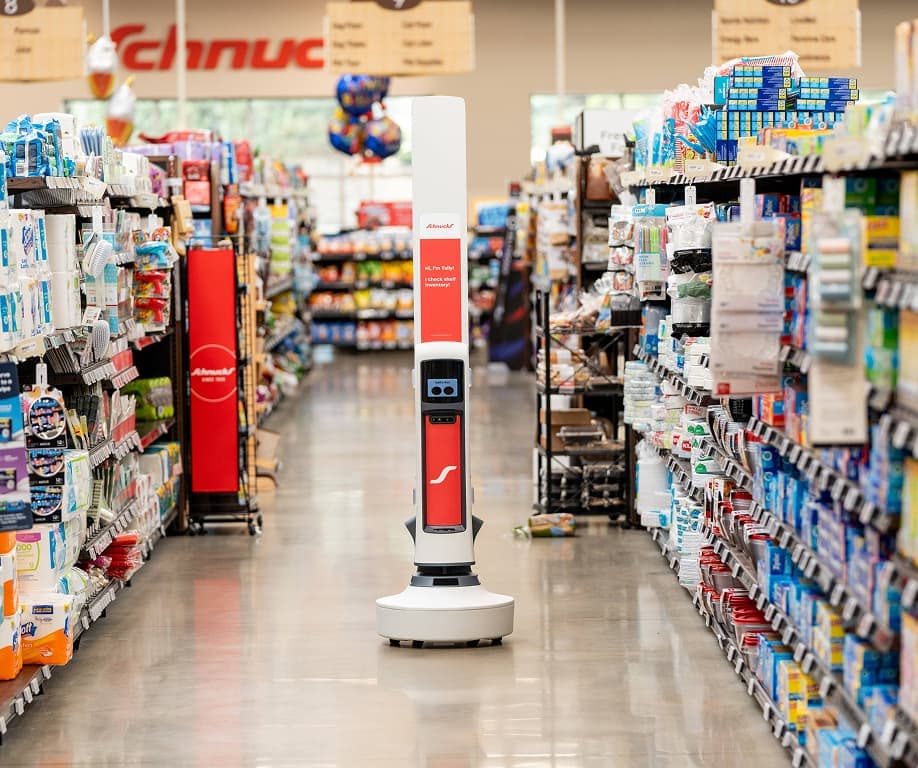
What I really like about Simbe’s approach is how it brings everyone to the table—supply chain, merchandising, and store ops. It’s rare to find a technology that benefits all three. Once store teams see the results, they’re not going to want to give Tally back.
Q: You’ve joined Simbe’s Strategic Advisory Board. What drew you to the company?
A (Marybeth): I once had a recruiter tell me, “Retail is dead.” That couldn’t be further from the truth. Consumers still love going into stores, the reasons have just evolved.
What excited me about Simbe is that it’s a company using technology and AI to make stores better. We talk a lot about digital innovation, but the majority of commerce still happens in brick and mortar. We can’t forget that.
Also—true story—when I found out the robot’s name was Tally, which happens to be a family name from a great grandmother, I took that as a sign!
Q: Looking ahead, what global lessons should U.S. retailers keep in mind as they rethink their operating models?
A (Marybeth): The U.S. has to get over the “not invented here” syndrome. Markets like China and Korea are ahead in mobile payments, one-hour delivery, and blending social media with shopping.
They’ve leapfrogged us because they didn’t have legacy systems holding them back. We need to be humble enough to learn from that.
Q: Finally, if you imagine a world where shelf intelligence is fully adopted, what changes most?
A (Marybeth): I think we’ll see truly seamless checkout, serialized UPCs, and robots handling repetitive tasks. But the bigger shift is strategic: retailers and suppliers will finally share one version of the truth.
The finger-pointing can stop. With shelf intelligence, you know what’s really happening—and you can act on it.
![[On Demand] Real Talk | What Using Robots in Retail Stores is Really Like](/_next/image?url=https%3A%2F%2Fcdn.sanity.io%2Fimages%2Foh42c9n6%2Fproduction%2F8cb019fe8c1a0e3317a85dfff2d95fad7fc5038a-3240x1700.png&w=3840&q=75)