
From Shelf to Balance Sheet: How AI & Automation Unlock Net Working Capital

Anil Taneja
The Cash Constraint Reality
Retail is a cash-hungry business. Shelves need to be stocked, supply chains kept moving, and promotions funded all before a single dollar hits the register. In an era of higher interest rates, tighter credit markets, and rising operational costs, the cost of holding cash in the wrong places is high.
That’s why many of today’s most disciplined retailers are looking beyond sales and margin levers to optimize something less flashy but equally powerful: Net Working Capital (NWC).
At its simplest, NWC measures the balance between a company’s current assets (think inventory, receivables, and cash) and current liabilities (payables, accrued expenses, short-term debt). Positive NWC means you’ve got breathing room to operate. Negative NWC means your business is walking a tighter rope, often borrowing from tomorrow to pay for today.
The challenge? In retail, where inventory is the largest lever, NWC can feel fixed. But it doesn’t have to be.
Net Working Capital Is a Team Sport
For too long, NWC has been thought of as a finance metric. In reality, it’s influenced by nearly every corner of the enterprise:
- Merchandising: Overbuys and seasonal markdowns tie up millions in cash. Smarter assortment planning and tighter SKU rationalization improve both sell-through and working capital.
- Supply Chain: Inefficient DC-to-store transfers or vendor over-shipments clog the system with inventory no one needs right now.
- Store Operations: Phantom inventory and inaccurate replenishment data distort orders, inflating safety stock and cash outlay.
- Vendor & Supplier Management: Disputes over quantities and compliance can tie up capital in credits or claims for months.
- Finance & Procurement: Without accurate inventory signals, forecasting and cash planning are guesswork.
When you zoom out, it becomes clear: improving NWC is not just about finance discipline, it’s about better execution across the business.
Where Automation Changes the Game
The common thread across these challenges is visibility. Merchants can’t adjust assortments without accurate sell-through data. Supply chain leaders can’t optimize replenishment if orders are distorted by phantom counts. Finance teams can’t forecast cash with confidence if they don’t trust what’s sitting on the shelf. And store associates can’t resolve out-of-stocks if they don’t know what’s really missing.
In short: without in-store visibility, every team is making decisions in the dark and that carries a real cash cost.
What’s needed is a constant, trusted view of shelf conditions such as item location, on-hand inventory accuracy, pricing integrity, and movement patterns that updates continuously, not just when someone manually walks the aisles with a clipboard. Modern automation and AI make that possible by capturing reality at the shelf multiple times per day and translating it into insights that every function can act on.
From Shelf Accuracy to Liquidity Engine
Think about the balance sheet impact when that visibility becomes daily reality. Inventory turns faster because replenishment matches true demand, reducing Days Inventory Outstanding (DIO). Cash moves more freely through the system because fewer disputes with vendors slow things down, improving the Cash Conversion Cycle (CCC). And discrepancies that would otherwise sit undetected—like misplaced product, pricing errors, or shrink—are caught early, turning potential losses back into working capital.
In other words, shelf accuracy doesn’t just keep stores in order. It transforms into a liquidity engine, releasing tied-up cash and making the business more agile.
As Tim Horton, VP of Center Store at Schnuck Markets, put it:
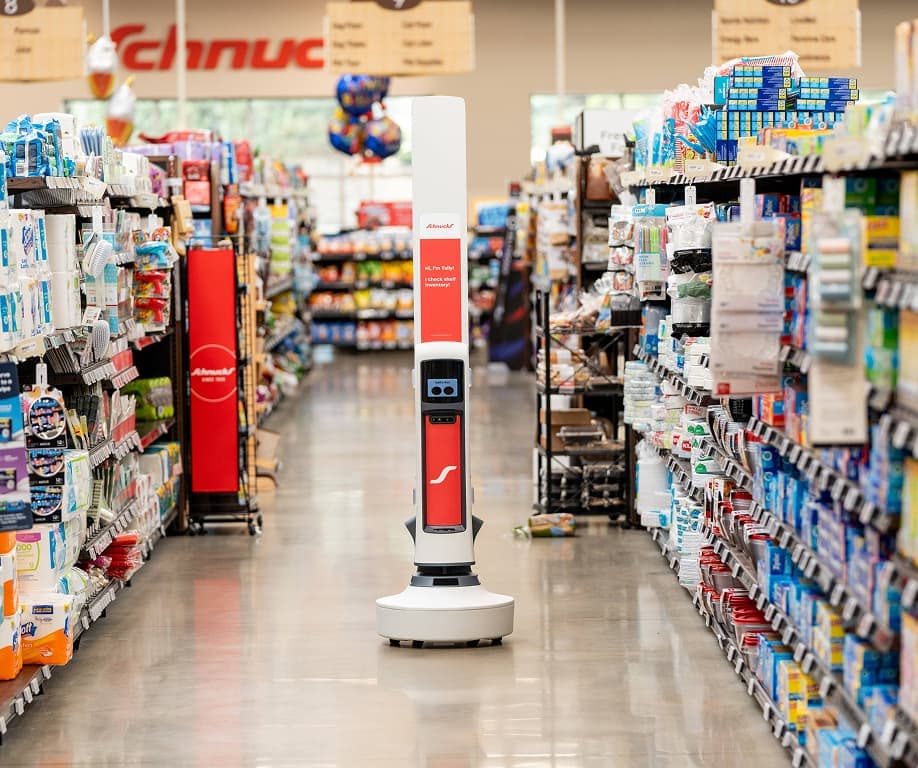
“With the advent of data collection from in-store robotics, we have real-time signals from every store every day. We can use this data internally and externally, benefiting our customers by reducing out-of-stocks, improving product availability, and better managing our inventory levels. We also reduce the amount of inventory we carry while improving in-stock rates.”
That’s not just better operations, it’s better liquidity.
Building Resilience in Volatile Markets
Retailers know unpredictability is the only constant. Demand shifts, supply chain issues, and vendor disruptions all put pressure on working capital. The difference between those who weather storms and those who struggle often comes down to agility.
Automation enables a perpetual cycle of NWC optimization. Retailers continuously right-size inventory, respond faster to shocks, and free up cash for strategic moves. That agility means when opportunity knocks—whether it’s investing in a new banner, launching a private label, or responding to a competitor’s pricing shift—you have the liquidity to act.
The Enterprise-Wide Payoff
What makes NWC optimization powerful is that every function sees the upside:
- Finance: Predictable cash flow, improved CCC, and capital available for reinvestment.
- Merchandising: Smarter assortments and fewer markdowns.
- Supply Chain: Leaner, more reliable replenishment and stronger vendor leverage.
- Store Operations: Less time counting, more time serving customers.
- IT & Data: A single, integrated platform that feeds insights into ERP, supply chain, and financial systems without bolt-on complexity.
And ultimately, the shopper benefits from fuller shelves, more accurate pricing, fresher assortments, and associates with more time to help. Customer loyalty is, after all, the ultimate ROI.
Rethinking Automation as a Capital Efficiency Play
When most executives hear “automation,” they think of cost savings or labor reallocation. Those are real benefits. But the bigger story, and the one too often overlooked, is automation as a capital efficiency tool.
Investing in Simbe isn’t just about fixing out-of-shelfs or improving pricing accuracy. It’s about unlocking liquidity from the balance sheet, reducing reliance on external financing, and creating financial breathing room to innovate.
In today’s retail landscape, that’s not just nice to have. It’s survival.
Closing Thought
Net Working Capital may sound like finance jargon, but in practice it’s a scoreboard for operational excellence. Every excess pallet in the DC, every phantom case in the backroom, every disputed invoice, they all add up to cash that could be working harder for the business.
By digitizing the shelf and turning data into daily action, Simbe helps retailers reclaim that cash, strengthen resilience, and refocus investment on growth, not carrying costs.
Because in retail, the real winners aren’t just the ones who sell the most. They’re the ones who make their cash work the hardest.

Anil Taneja
Senior Director, Retail Strategy & Scaling
Anil Taneja is Senior Director of Retail Strategy & Scaling at Simbe. He brings nearly two decades of strategy, consulting, and customer growth experience across retail and CPG, including a Global Partner Alliance Leader role at AWS, VP of Customer Growth and Customer Success at InContext Solutions and SwiftIQ, and management consulting at PwC and The Cambridge Group.
![[On Demand] Real Talk | What Using Robots in Retail Stores is Really Like](/_next/image?url=https%3A%2F%2Fcdn.sanity.io%2Fimages%2Foh42c9n6%2Fproduction%2F8cb019fe8c1a0e3317a85dfff2d95fad7fc5038a-3240x1700.png&w=3840&q=75)