
How In-Store Robotics and Computer Vision Are Transforming Pharmacy Execution and the Patient Experience

Thom Blischok
The brick-and-mortar pharmacy sector is on the cusp of a transformation fueled by robotics and automation. Robotics and automation in pharmacies come in two variations: behind the pharmacy counter and in-store. While each serves a distinct role, together they represent an opportunity to improve both operational efficiency and the patient experience. This article explores how these approaches work in tandem.
The pharmacy sector operates under a uniquely complex set of requirements that set it apart from broader retail. Beyond traditional merchandising challenges, pharmacies must balance clinical accuracy, regulatory compliance, and patient trust while managing front-of-store expectations. Patients now expect both speed and personalized care, placing added pressure on pharmacists to deliver high-touch service in limited time. As a result, even small efficiency improvements can have an outsized impact, particularly when they elevate the human experience.
Supporting Pharmacist Productivity and Patient Interaction
At the prescription drug counter, innovations in robotic and automation technology are being implemented to help pharmacists serve their patients more effectively by streamlining the entire prescription fulfillment process. The adoption of dispensing pharmacy robotics presents several significant challenges, including financial stability, technical operations, workflow integration, and, most importantly, regulatory compliance. Several pharmacy dispensing robotic technologies are entering the market today, including vial-filling robots, automated storage and retrieval systems, compliance packaging robots, countertop counting devices, and self-service kiosks. All of these require a fundamental overhaul of pharmacy dispensing workflows.
Creating an Improved In-Store Pharmacy Shopping Experience
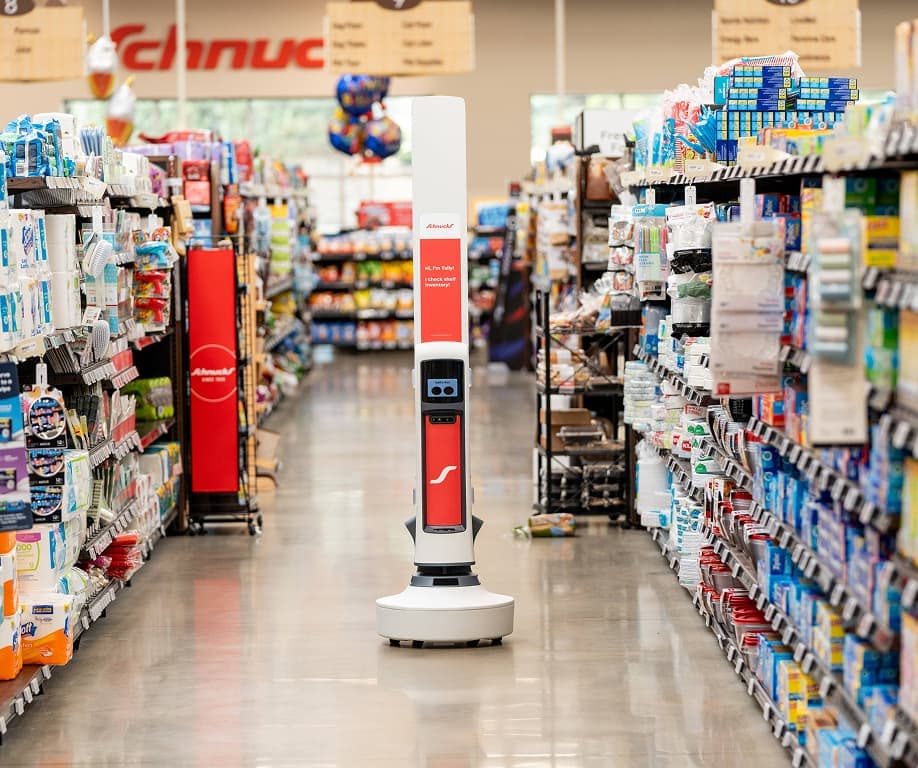
The pharmacy industry is still learning to recognize the value of in-store robotics, as evidenced by the successes already achieved in the grocery, mass, and club sectors. This class of robots focuses on ensuring products are on the shelf, identifying the right prices and promotions, improving associate productivity, and ultimately enhancing the overall shopping experience.
Such retailers share four key success characteristics:
1. Enhanced shopper experiences that foster increased loyalty
2. More efficient purchase-to-shelf inventory management
3. Associates enthusiastic about engaging with shoppers
4. Shopper recognition that the retail brand exemplifies growth and innovation through technology to serve customers better at a lower cost
Key Considerations for Scaling In-Store Robotics Across Pharmacy Stores
In the context of pharmacy dispensing robotics and automation, it is important to understand and consider integration with pharmacists - ensuring regulatory compliance, accuracy, and adherence to standards—as well as potential patient responses. Additionally, the most important factors are the costs associated with integration and operation. New processes and workflows must be developed.
However, when it comes to implementing front-end in-store robotics, the situation is quite different. Success is widespread across retail, from large to small grocery stores and clubs. Pharmacy can apply lessons learned from others who have pioneered the use of in-store robotics to enhance the shopper’s experience and reduce costs.
Apart from vision and commitment, nothing prevents pharmacies from adopting front-end in-store robotics.
What's Next as a Pharmacy
First and foremost, deploying robotics in pharmacy involves shifting from viewing these technologies as isolated systems to recognizing them as integral parts of both the dispensing workflow and the in-store retail team. While automation behind the pharmacy counter continues to evolve, many operators are finding that in-store robotics offers a more immediate and scalable path to improving execution and the patient experience.
There are three key phases to win with front-end in-store robotics:
Phase 1: Strategy & Analysis
- Determine banner expectations for implementing in-store robotics, drawing from a growing set of proven, at-scale retail deployments.
- Assess specific banner needs by identifying high-impact bottlenecks, such as inventory and shelf management, pricing and promotion, and focus on proven, high-frequency use cases that can deliver rapid, measurable ROI to drive stakeholder buy-in.
- Define success with clear KPIs, including inventory and shelf productivity, pricing and promotional execution, labor costs, and set thresholds to manage risk.
- Build a cross-functional change management team with business leaders, IT, facilities, and store operations to address all departmental impacts.
Phase 2: Technical Readiness
- Evaluate store and enterprise Infrastructure, including strong Wi-Fi connectivity and stable electrical systems for autonomous movement and charging.
- Identify a dedicated charging location with convenient access to power, ideally in visible but non-disruptive areas away from entrances, exits, and high-traffic pathways to support seamless daily operation
- Prioritize integrations: Select robotics that seamlessly connect with your Merchandise, WMS, or ERP systems while leveraging advanced computer vision and AI within a broader store intelligence platform to deliver highly accurate, real-time shelf intelligence through continuous, autonomous data capture rather than manual or periodic audits.
- Finally, develop the data and analytics framework to leverage real-time in-store robotic information to stand out with shoppers — all while reducing the cost to serve.
Phase 3: Human & Operational Integration:
- Proactive Change Management: Engage employees early by explaining how robots will handle "dull and/or mundane" tasks, enabling staff to concentrate on higher-value customer interactions.
- Comprehensive Staff Training: Educate employees on how the in-store robot will assist them in their daily work efforts.
- Shopper & Community Communication: Clearly communicate the purpose and benefits of in-store robotics to shoppers, local communities, and the media to reinforce how the technology improves product availability, pricing accuracy, and the overall shopping experience.
- Start with a phased rollout in a single store to gather feedback and optimize workflows before scaling up to full banner implementation
Retailers that succeed in scaling in-store robotics are those that combine proven technology, seamless integration, and actionable data with a clear focus on delivering measurable operational and customer experience improvements.
MOST IMPORTANTLY: CHOOSE A PROVEN IN-STORE ROBOTICS PARTNER RECOGNIZED FOR INNOVATION, EXECUTION, AND DEPENDABILITY
Frequently Asked Questions
What are in-store pharmacy robots used for?In-store pharmacy robots help retailers improve inventory visibility, pricing accuracy, shelf conditions, and overall operational execution. Many also leverage computer vision and AI to provide real-time insights that help store teams respond more quickly to issues impacting the shopper experience.
What is the difference between pharmacy automation and in-store robotics?Pharmacy automation typically refers to technologies used behind the prescription counter, such as dispensing systems, automated storage, and prescription fulfillment tools. In-store robotics focuses on front-of-store operations, including shelf management, pricing verification, inventory visibility, and shopper experience improvements.
How does computer vision support pharmacy operations?Computer vision enables in-store robotics to continuously capture and analyze shelf conditions, product availability, pricing, and promotional execution in real time. This helps pharmacy retailers improve operational accuracy while reducing the need for manual audits.
Will robotics replace pharmacy employees?Retailers are increasingly adopting robotics to support store associates and pharmacists rather than replace them. By automating repetitive and time-consuming tasks, employees can spend more time focusing on customer service, patient interaction, and higher-value operational activities.
Why are pharmacies investing in in-store robotics now?Pharmacies face growing pressure to improve operational efficiency while meeting rising patient expectations for speed, accuracy, and personalized service. In-store robotics can help improve execution and provide real-time operational visibility across the store.
Thom Blischok is the CEO of The Dialogic Group and a 40-year retail and CPG industry veteran who advises Simbe’s leadership team. He previously served as Chief Retail and CPG Strategist at PwC and held senior global roles at Symphony IRI, Equifax, and Coopers & Lybrand.

Thom Blischok
CEO, The Dialogic Group | Simbe Strategic Advisor
Thom Blischok is CEO of The Dialogic Group and a 40-year retail and CPG industry veteran who advises Simbe's leadership team. He previously served as Chief Retail and CPG Strategist at PwC and held senior global roles at Symphony IRI, Equifax, and Coopers & Lybrand.
![[On Demand] Real Talk | What Using Robots in Retail Stores is Really Like](/_next/image?url=https%3A%2F%2Fcdn.sanity.io%2Fimages%2Foh42c9n6%2Fproduction%2F8cb019fe8c1a0e3317a85dfff2d95fad7fc5038a-3240x1700.png&w=3840&q=75)