Innovating with Intent: A Conversation with Bob Hardester on Retail’s Next Chapter

Caitlin Allen
Bob Hardester spent over a decade as Senior Vice President and CIO at Schnuck Markets, where he led the grocer’s digital transformation across IT, supply chain, and in-store technology. During his tenure, Schnucks became the first grocer globally to roll out autonomous robotics chain-wide. Today, Bob advises leading retailers across the U.S. and recently joined Simbe’s Strategic Advisory Board.
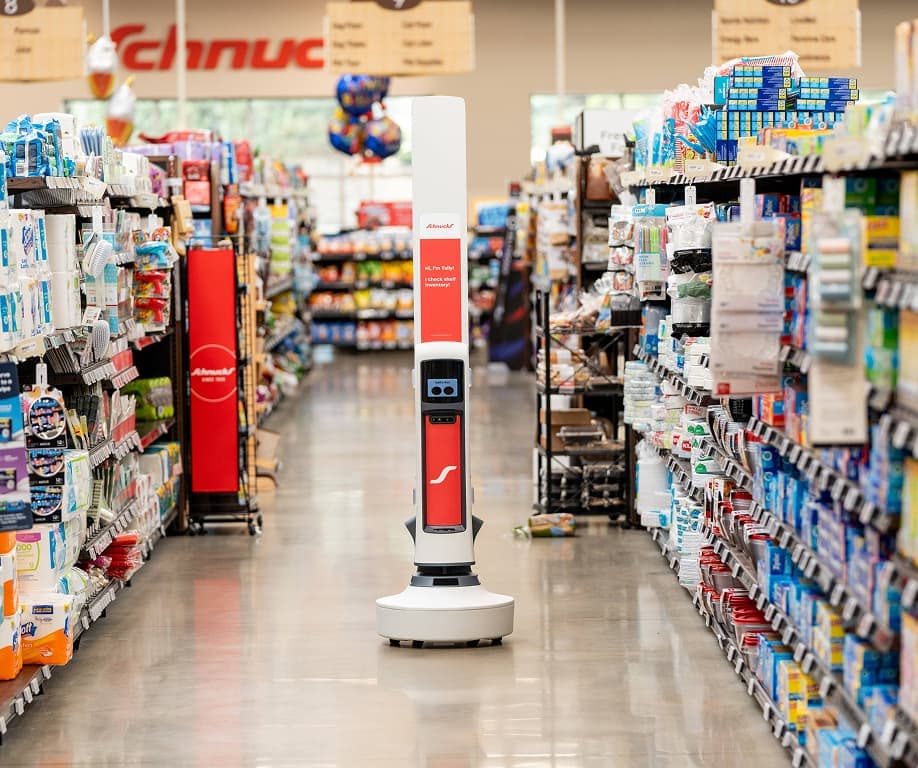
In our conversation, Bob reflects on his approach to purposeful innovation, the rollout of Simbe’s Tally at Schnucks, and how he believes shelf intelligence is defining the next era of grocery retail.

Caitlin Allen
SVP, Market
Caitlin Allen is SVP of Market at Simbe, where she leads brand, communications, and commercial strategy, and chairs Simbe's Strategic Advisory Board. She brings almost 20 years of experience scaling market-defining technologies from startup to IPO, including senior marketing roles at Lyft, Happy Returns, and Andreessen Horowitz.

“Innovation only matters if it’s purposeful. You don’t chase the shiny object, you look for what’s going to make a difference for your customers and your associates.”
Q (Caitlin): You’ve had an incredible career in IT and most recently at the intersection of retail. What shaped your approach to retail technology and innovation as a whole?
A (Bob): Retail was the most fun I had in my career. Grocery shopping is something people do multiple times a week, so your touchpoints are that much greater.
At Schnucks, we had a value system called COMET, and the “T” stood for Try new things. That encouraged us to work with partners, explore emerging tech at shows, and collaborate with other retailers to see what was possible.
Through it all, the mantra we used was, innovate with intent. Don’t chase the shiny object. First, make sure you understand the business and the real problem. Then go find the solution that helps address it. For me, innovation only matters if it’s purposeful, if it makes a difference for your customers and frees up time for associates to serve them better.
Q: You were one of the early executives to support deploying Simbe at Schnucks. What stood out to you then?
A (Bob): I still remember seeing Tally for the first time at FMI Midwinter in Chicago. It wasn’t about the fact that it was a robot, it was about what problems it could solve. In-stock position on the shelf, not just in the backroom, making sure the product was in the right spot, pricing accuracy—these were big challenges for grocers, and this was a way to tackle them.
What really impressed me was Brad and the team’s genuine passion and deep expertise. It wasn’t “here’s a robot, figure it out.” It was about the vision: how do we use this to solve real problems and make stores better? That intentionality resonated.
And, my team got excited too. When you’re working with a company like Simbe, where there’s a clear mission and vision, people want to be part of it. They want the freedom to try new things, to innovate with intent. That energy was a big reason we kept moving forward.
Q: How did store teams and shoppers respond to Tally?
A (Bob): Store teammates quickly saw the value because it helped ensure shelves were in great condition for customers. Pre-Tally, outs were often underreported. With Tally, we had accurate visibility, and that mattered.
“The moment store leaders said, ‘Tally is a teammate,’ was the turning point.”
Shoppers, I think, experienced it more indirectly. They may not have understood the data behind it, but they felt the results in better availability. And of course, kids loved the robot. We even had a birthday party for a three-year-old who wanted a Tally cake. If Tally had been scary or intrusive, that wouldn’t happen, but instead kids would run up and hug it. That kind of reception told us the design was right.
Q: What value did you uncover from Tally’s data over time?
A (Bob): The biggest was tying in-stock levels directly to sales. We worked with a consultancy to analyze substitutability and incrementality. If Jif isn’t there, does the shopper buy Skippy? That helped quantify the ROI of reducing outs.
Beyond sales, there were practical unlocks. Tally mapped every item in the store, which helped associates and Instacart shoppers find products quickly. It improved pricing accuracy and reduced errors. Those might sound operational, but they’re critical. If you frustrate customers with wrong prices or can’t help them find what they came for, they may not come back.
Q: How does shelf intelligence help brick-and-mortar retailers compete with online players?
A (Bob): Online incumbents like Amazon know exactly what’s in stock. Traditional grocers haven’t always had that confidence; planograms drift, perpetual inventory can be wrong, and catalogs aren’t always accurate. Shelf intelligence closes that gap.
If a shopper can’t trust that the product is on-shelf or find it in your app, they’ll turn to Amazon. Meeting that table-stakes expectation is critical. Then, by freeing up associates with tools like Tally and ESLs, you can focus on creating a differentiated in-store experience, the kind of personal service online players can’t match.
Q: You recently joined Simbe’s Strategic Advisory Board. What made you agree to participate?
A (Bob): Two reasons. First, the product is proven. It works. But product superiority alone doesn’t last, others can catch up. What really stands the test of time is leadership, vision, and a relentless focus on the customer. Those are the things that differentiate Simbe.
When I think about major investments in step-function technology, I don’t want to pick a vendor, I want to pick a partner. That’s what I saw in Brad and the team. With Simbe, it’s never been transactional. They listen, they collaborate, and they care deeply about client success. My team spent countless hours in roadmap discussions and problem-solving with them. Sometimes those conversations got tough, but the relationship never wavered. That’s what makes the technology not just cool, but impactful. And that’s why I wanted to be part of it.
“I don’t want to pick a vendor, I want to pick a partner—especially when I’m making major investments in step-function technology.”
Q: Looking ahead, what trends will shape the next five years of retail operations?
A (Bob): The biggest is AI. It will transform both customer experiences—things like meal planning, personalization, promotions—and corporate functions like merchandising and forecasting. The scale of investment reminds me of the dot-com days.
Robotics will keep expanding too, in-store and fulfillment. And retail media will grow significantly—it’s already a major profit driver for Walmart and Amazon, but smaller grocers are under-indexing. Finally, the monetization of data, done in a way that benefits consumers, will be critical.
The bottom line? In-store, online, and at home are converging. Shelf intelligence will be the foundation for making that connected retail experience real.
![[On Demand] Real Talk | What Using Robots in Retail Stores is Really Like](/_next/image?url=https%3A%2F%2Fcdn.sanity.io%2Fimages%2Foh42c9n6%2Fproduction%2F8cb019fe8c1a0e3317a85dfff2d95fad7fc5038a-3240x1700.png&w=3840&q=75)