Meet Giant Eagle’s Store Leader Driving In-Store Execution, In-Stock Performance, and Team Leadership

Lynn Brook
At Giant Eagle, Store Leader Logan Santini is responsible for far more than daily operations. From supporting a team of 160 employees to navigating constant change on the retail store floor, his role sits at the center of everything that impacts both team and customer experience.
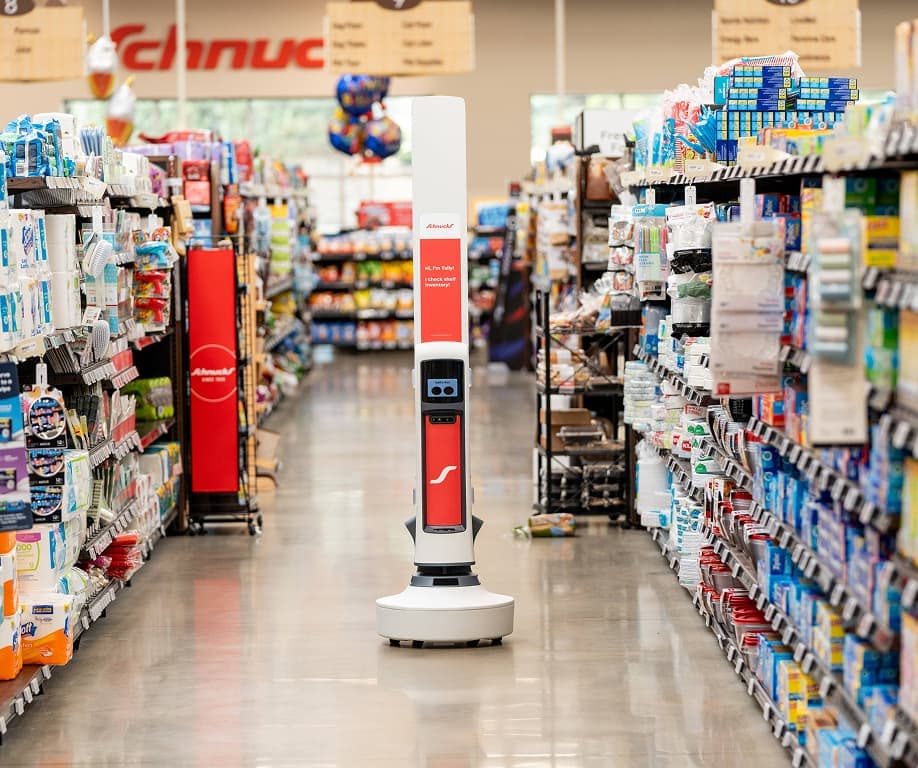
We spoke with Logan about the realities of in-store execution, what it takes to run a high-performing store, and how store technology like Tally, the autonomous shelf scanning robot, fits into his team’s day-to-day.
Like many grocery retailers, Giant Eagle is focused on improving inventory visibility, pricing accuracy, and overall store execution while supporting store teams on the floor.

Q: Can you tell us about your role and what a typical day looks like managing store operations, inventory, and team performance?
I’m a store leader at Giant Eagle, and I’ve been here for about a year and a half. Before that, I spent over a decade at other well-known retailers, so I’ve seen different sides of retail.
Day to day, I’m responsible for everything from retail store operations and inventory management to people and performance. I oversee about 160 team members, and that includes not just their work, but supporting them as individuals.
It’s a lot of hats to wear at once. You’re solving problems in real time, making decisions that impact the team and the customer, and making sure the store is executing at a high level every single day.
Q: What are some of the biggest day-to-day challenges in grocery store operations?
A lot of it comes down to the unknown.
You can walk into a shift and have a plan, and then something unexpected happens. You might lose power, have a system issue, or have unexpected staffing challenges. You have to make decisions quickly, and those decisions affect both your team and your customers.
One of the biggest challenges is making sure your team has what they need to succeed. That often includes having the right tools and clear visibility into what’s happening across the store. That’s something I think about constantly.
“What keeps me up at night is making sure my team is supported and has the tools they need to execute their job the right way.”
At the same time, you’re balancing performance. We have key metrics around profitability, sales, and operations, and we’re accountable for hitting those. It’s a constant balance between people, process, and results.
Q: What does a successful day look like in terms of in-store execution, shelf conditions, and team performance?
A successful day is when everything comes together.
Your shelves are stocked, your store is in great condition, your team is engaged, and your customers are having a positive experience. It sounds simple, but it takes a lot of coordination to make that happen consistently.
I focus on three things every day: safety, the team, and store conditions. If we’re executing well in those areas, the rest tends to follow.
Q: What helps you stay effective in a fast-paced retail environment with constant operational demands?
For me, it comes down to organization and communication.
I’m very structured in how I approach the day. I keep detailed notes, stay on top of communication, and make sure I’m using the tools available to me effectively. Whether it’s handheld devices, reporting systems, or just staying connected with the team, all of that plays a role. Having access to the right information at the right time is critical to making fast, informed decisions.
I also try to stay open to new store technology. Retail is always evolving, and the more you can adapt, the better positioned you are to lead your team through change.
Q: How was Tally the robot introduced into your store, and how did your team respond?
We piloted Tally the robot at our Moon Township location in 2025.
When people hear about automation or AI, the first reaction is to wonder how it will change their day-to-day.
That’s why communication with store teams was so important during the rollout of Simbe’s shelf digitization technology. The system captures real-time shelf data to help teams better understand in-stock conditions and pricing accuracy.
We spent time walking the team through what it was, how it worked, and most importantly, how it would help them.
“Everyone’s afraid of the unknown. I am too. But when you give people the right information and show them the impact, that’s when things start to click.”
Q: How does Tally the robot fit into your team’s daily workflow today?
The biggest difference is visibility and efficiency.
Before, getting a clear picture of in-stock conditions meant going into multiple systems and pulling together information manually. It wasn’t always easy to get a single, reliable view of what was happening on the shelf and it could take a significant amount of time just to understand where the gaps were.
With Tally, that process is much more straightforward. The reports give us a clear view of what’s out of stock, where there’s a discrepancy, and what needs to be addressed.
“It turned something that used to take hours into minutes.”
That allows the team to spend less time searching for information and more time actually improving shelf conditions on the floor. It also helps reduce the need for manual checks across the store.
Q: Have you seen measurable improvements in pricing accuracy, in-stock conditions, or store performance since implementing Tally the robot?
Yes, especially when it comes to pricing and in-stock accuracy.
The pricing report has been one of the most impactful tools for us. It identifies discrepancies quickly so we can fix them before they affect margin or the customer experience.
“I’m proud to say we reached about 99 percent pricing accuracy. That’s something that used to take a lot of manual effort to maintain.”
We also saw strong improvements in in-stock conditions, particularly during high-demand periods like the holidays. Having that visibility helped us stay ahead and keep products available for customers.
Q: How did your team adapt to Tally the robot over time?
Once the team started seeing results, the mindset shifted pretty quickly.
At first, there were questions, which is completely normal. As they worked with the reports and saw improvements in the store, they became even more engaged.
One of the biggest factors was having internal champions to help reinforce adoption and build confidence across the team. I had a team member who really took ownership of learning Simbe’s shelf intelligence platform and helping others understand it.
“When the team sees results, they want to learn more. It becomes something they take pride in.”
That’s when it really becomes part of the routine, not just another task.
Q: What impact has Tally the robot had on the shopper experience?
Customers have responded very positively.
A robot is something new and different in the store, so Tally naturally draws attention. We had customers asking questions, taking pictures, and even bringing their kids over to see it.
But beyond that, the real impact is consistency. When products are in stock and pricing is accurate, customers notice.
It builds trust. They know they can come in and find what they need.
Q: What are you most proud of as a store leader managing a large retail team?
I’m most proud of my team.
At the end of the day, everything we do comes back to the people in the store. Watching them grow, take ownership, and deliver results is the most rewarding part of the job.


Lynn Brook
Sr. Director, Product Marketing
Lynn Brook is Senior Director of Product Marketing at Simbe, where she leads positioning, go-to-market strategy, and customer advocacy. She brings over 15 years of product marketing experience at retail technology companies, specializing in multi-audience commerce environments with leadership roles spanning high-growth startups to billion-dollar companies.
![[On Demand] Real Talk | What Using Robots in Retail Stores is Really Like](/_next/image?url=https%3A%2F%2Fcdn.sanity.io%2Fimages%2Foh42c9n6%2Fproduction%2F8cb019fe8c1a0e3317a85dfff2d95fad7fc5038a-3240x1700.png&w=3840&q=75)