Six Lessons in Retail Technology Adoption and Change Management from Schnucks

Lynn Brook
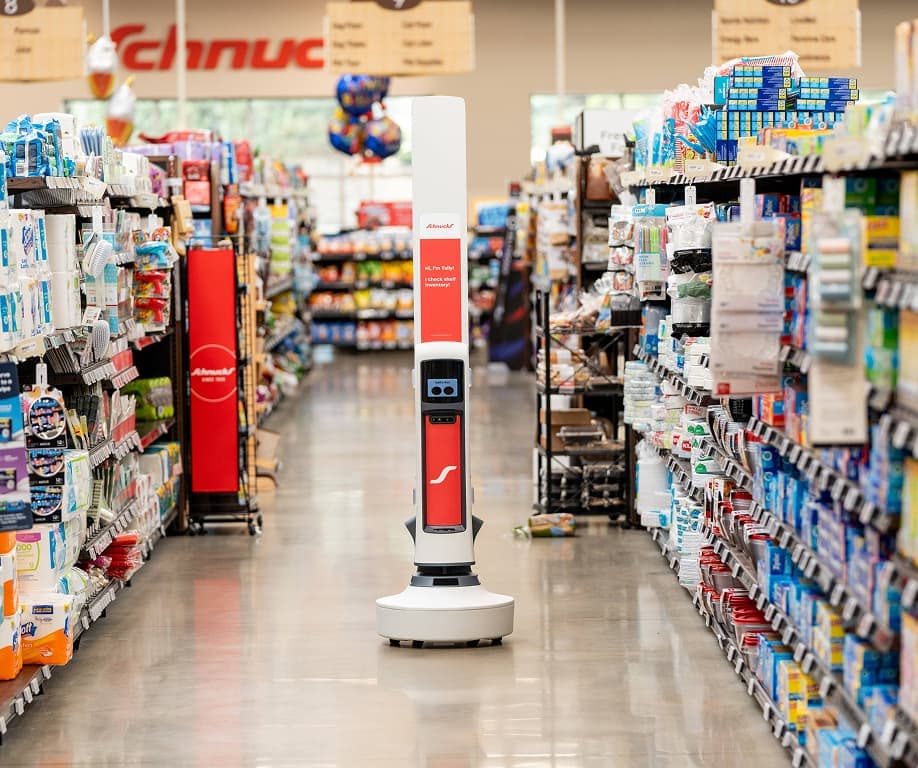
When Schnuck Markets first deployed Tally, Simbe’s autonomous shelf-scanning robot, there was no playbook for deploying retail robotics at scale like there is today.
What followed was a period of trial, adjustment, and learning.
We sat down with Kim Anderson, VP of Store Operations, and Dave Steck, former VP of IT Store and Emerging Technology to discuss what they learned along the way and what advice they would offer retailers implementing store intelligence technology today.
Below are six lessons from their experience.
1. Technology adoption requires internal ownership and partnership
Organizational alignment is what drives adoption, not the technology alone.
In the early stages of deploying Tally, the rollout was largely treated as a technology initiative, focused on deployment, integration, and getting the system up and running. Over time, it became clear that successful adoption required treating it as an operational initiative as well, embedding the technology into daily store workflows and processes. The platform may be technical, but the outcomes are operational. When IT and Operations work together, execution and value realization accelerate.
At the same time, early pilots can lose momentum if too many stakeholders are involved before a clear operating model is established. The most effective approach is to start with a small, cross-functional group that can move quickly, test, and refine how the technology fits into store operations before scaling more broadly.
That early focus creates clarity as the program expands. As the rollout scales, alignment between IT and Operations becomes essential to turning insights into consistent execution across stores.
As Dave Steck put it, “Operations has to be 100% behind technology. It has to be lockstep because it’s a technical implementation that requires both the technical and the operational background.”
Retailers implementing store intelligence technology should align IT and Operations early, with clear ownership and a focused team responsible for proving value before expanding across the organization.
2. The data will reveal problems no one knew existed, and that's the point
Before deploying Tally, Schnucks believed their on-shelf availability was strong and that out-of-stocks were relatively minimal.
Once the robot began scanning shelves consistently, the picture became clearer. For the first time, the team had a consistent, objective view of shelf conditions across every store.
In reality, the number of out-of-stocks was meaningfully higher than expected. That gap between perception and reality is not unique.
As Kim put it, “We thought we knew, but boy we did not know.”
That visibility is where the value begins. Issues that were previously hidden can now be identified, prioritized, and resolved with confidence.
Rather than being a setback, this moment is often a turning point. It gives teams a shared, trusted view of reality and a clear path to improving execution across stores.
3. Phase the rollout to drive adoption and results
As early data came in, including out-of-stocks and pricing discrepancies, it became clear that the total volume of issues surfaced was large. With hundreds of tasks identified across stores, prioritization was key to ensure teams could focus on what mattered most.
To help teams adapt, the work queue was limited to roughly 60 priority KPIs per day. Teammates could pull additional tasks if they had time, but the smaller queue ensured teams could focus on the highest-impact actions first.
Looking back, the phased approach was effective in building confidence, but likely lasted longer than necessary to get over the hump and see a significant acceleration in resolved issues.
"I would have moved quicker to give them everything," Kim reflected.
Once store teams understood the value of the work and built trust in the system, they were ready to take on more. Expanding the full workload sooner could have accelerated results, especially given that many issues reappear daily and require consistent attention.
A phased ramp is smart at the beginning. The opportunity is knowing when to accelerate.
4. The real long-term value is operational consistency
Out-of-stock recovery and pricing accuracy are often the most visible benefits of shelf intelligence technology. But one of the biggest long-term gains is operational consistency.
Before automation, tasks like scanning for outs were difficult to complete reliably. Store teammates were constantly pulled in different directions throughout the day.
Automated shelf scanning removes that variability. Tasks are completed consistently, data is captured reliably, and leadership gains visibility into whether standard operating procedures are actually being executed across locations.
"We took the one task that was really hard to make repeatable and made it repeatable," said Dave.
Consistency is where the long-term operational value compounds.
5. Don’t fear shopper perception
One concern retailers sometimes raise when introducing in-store robotics is how shoppers will react.
At Schnucks, the response was overwhelmingly positive. “Our customers love Tally,” said Kim.
Shoppers ask questions about the robot. Kids collect stickers and coloring pages, and have Tally themed birthday parties.
That kind of goodwill may not show up in a traditional ROI model, but it is real. For many stores, the robot quickly becomes part of the in-store experience rather than a disruption.

6. The pilot is the starting point, not the finish line
In the early days, the full potential of the technology was hard to see. The data was there, but translating it into clear operational processes took time and close collaboration between Operations and IT.
What changed things was the ongoing partnership between those two functions. As the team worked through what the data was showing, what stores actually needed, and what processes to build around those insights, the possibilities started to come into focus. Once that happened, the continuous improvement never stopped.
“There were returns we never even visualized,” said Dave.
The retailers who get the most from store intelligence are the ones who enter the relationship knowing the pilot is just the beginning. The real value is built over time by teams that learn how to turn data into action, continuously improve how stores operate, and keep asking what else is possible.
Adoption is a long-game investment. Deploying the robot unlocks value almost immediately, and that value continues to compound over time as teams discover new ways to act on the data.
Schnuck Markets has been a Simbe partner since the early days of retail robotics. Kim Anderson and Dave Steck shared these insights for a Simbe Client Advisory Board session, where retail leaders share lessons learned, discuss operational challenges, and help shape what’s next.

Lynn Brook
Sr. Director, Product Marketing
Lynn Brook is Senior Director of Product Marketing at Simbe, where she leads positioning, go-to-market strategy, and customer advocacy. She brings over 15 years of product marketing experience at retail technology companies, specializing in multi-audience commerce environments with leadership roles spanning high-growth startups to billion-dollar companies.
![[On Demand] Real Talk | What Using Robots in Retail Stores is Really Like](/_next/image?url=https%3A%2F%2Fcdn.sanity.io%2Fimages%2Foh42c9n6%2Fproduction%2F8cb019fe8c1a0e3317a85dfff2d95fad7fc5038a-3240x1700.png&w=3840&q=75)