What Grocers Can Learn from Schnucks About Shelf Intelligence
Published
For Schnucks, the turning point in the adoption of in-store robotics came when operations and IT began working together on a practical question: How could shelf data improve work for store teams?
At the National Grocers Association’s 2026 Executive Conference in Chicago, Kim Anderson, Vice President of Store Operations Support at Schnuck Markets, Inc., joined Claudia Molina, Simbe’s Vice President of Client Success, to share what that shift to surfacing ground truth in the store made possible.
Moderated by Thom Blischok, Chairman and CEO of The Dialogic Group, the shelf intelligence discussion explored how grocers can improve on-shelf availability, price accuracy and planogram compliance, then enable the same shelf data as an operating layer across the business. Schnucks’ experience offered other operators a practical path from a technology pilot to an everyday operating capability.
Below are highlights from the discussion, edited for length and clarity.

Q: How did in-store robotics become a core operating capability at Schnucks?
A (Kim Anderson): It started as an IT initiative nearly a decade ago. The team saw the robot at a show or conference, brought it into a store, and worked with it for months.
When the operations and workforce management teams joined the conversation, there was all this data and a list of things we wanted stores to do. I said the stores weren’t doing it because we were asking them to do more work. We had to use the data the robot was giving us to remove tasks that the store team didn’t like doing.
If store teams were going to embrace having the robot in the store, we had to automate what they didn’t want to do. I refer to that as “automate the hate.” That’s when it started clicking. IT and operations became one team, and we started developing ways to use the data.
Q: What did Tally reveal that you didn’t know before?
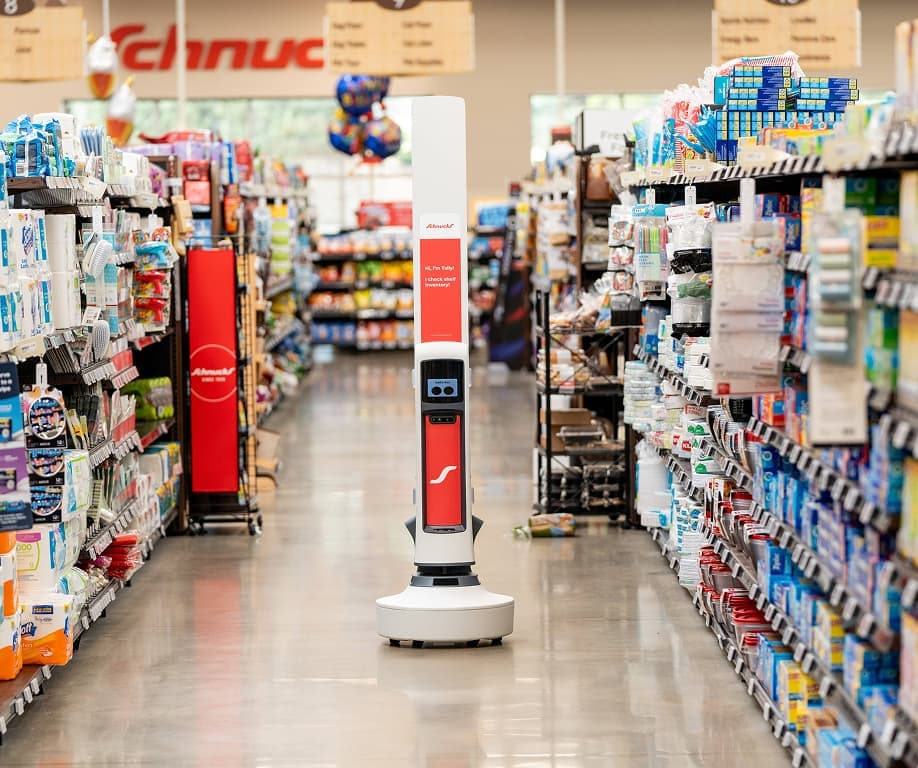
A (Kim Anderson): When we first got the data back, it was eye-opening. You think you know your in-stock position and tag accuracy, but people are doing the scanning and reporting. On a busy day, they may only get to two aisles. Those aisles look great, but another 15 haven’t been scanned.
When you’re working with data that a robot collects three times a day, it can take your breath away. But the power is in how you use that data to improve the business.
Q: What can the shelf tell a retailer?
A (Claudia Molina): The shelf can tell you when products are out of stock or running low, when a price or promotional price is incorrect, when a tag is missing, or when an electronic shelf label is blank.
We turn those images into data and insights retailers can use across inventory, supplier systems, merchandising, planograms and labor management. Tally identifies what needs to be fixed and where work should be prioritized. Then it comes back to inspect whether the task was completed. That closes the loop between identifying an issue and checking that it was resolved.
Q: How does that change productivity and the customer experience?
A (Kim Anderson): We’re empowering team members with technology so they can be more focused and have more time for customers. For smaller operators, competing with Walmart on price isn’t how we’re going to win. We have to create amazing customer experiences. Removing tasks lets them focus on customers and give them attention while they’re in the store. That’s how you build loyalty and brand trust.
Q: How has shelf intelligence changed the way Schnucks does business?
A (Kim Anderson): Our in-stock position has improved dramatically, and our price accuracy improved significantly when we were still using paper tags, then ESLs. Those things enhance the customer experience. Everything we do as independents and regional retailers has to be about the customer.
Excluding supplier-constrained products that we can’t get from the manufacturer or distribution center, we average 0.6% or less out of stocks from week to week. For customers, that means coming in with a shopping list and being able to get what they want.
A (Claudia Molina): The same data can support digital and omnichannel shopping. Product location data can help shoppers navigate to an item through an in-store app. It can also help fulfillment partners understand what’s in stock and find the product.
A (Kim Anderson): Even for retailers without perpetual inventory, Tally can be an enabler. Shelf data can feed an online catalog based on how often the robot scans, helping online shoppers know what’s available and reducing the likelihood of a replacement or refund.
Q: How can retailers use shelf data to improve merchandising execution?
A (Claudia Molina): One of the great things about our partnership is exploring new ways to use the data. Whether or not a retailer uses a planogram, knowing exactly where products are on the shelf and comparing that with what was intended is powerful for merchandisers.
That store visibility brings accountability to the store, helps teams fix errors faster, and provides insight into planogram execution. The same shelf data can help improve multiple areas of the business.
Q: What does a retailer need to do to turn the technology into value?
A (Kim Anderson): The biggest link is how you’re going to leverage the shelf data. You have to explain what you need in the store, and Simbe is a partner in helping you work through that information. Once you have the data, the question is how you’re going to use it.
Q: Where can shelf intelligence give independent grocers a competitive edge?
A (Kim Anderson): Being in stock is a differentiator, especially heading into October, November and December. We get customers back during the holidays who may be shopping across multiple channels. Being ready for that matters.
A (Claudia Molina): As a small or independent grocer, you can also be a technology leader and be innovative. Innovation can happen at every size of the retail spectrum.
Explore how shelf intelligence can support your stores. Watch the Simbe platform demo.