When Stock Lies: How Phantom Inventory Disrupts Retail (And How to Solve It)

Simbe
Phantom inventory is a pervasive challenge that quietly disrupts retail operations — often without retailers even realizing it is happening. It occurs when a store’s inventory management system records a product as in stock, but the item is physically absent from the shelf. This gap between system records and shelf reality leads to frustrated shoppers and missed sales opportunities.
The Impact on Inventory Accuracy is Measurable
Phantom inventory directly undermines a retailer's inventory accuracy rate, the percentage of SKUs where the system record matches the physical shelf reality. Research from ECR shows phantom inventory can reduce sales by as much as 3%. For a grocery retailer with $500 million in annual revenue, that is $15 million in preventable lost sales. Beyond the revenue impact, phantom inventory impacts demand forecasting: when the system believes an item is available, replenishment orders are never triggered, leaving shelves empty for days or weeks before anyone notices.
Over time, phantom inventory diminishes the customer experience and erodes profitability. And because the problem is invisible by definition, the system believes everything is fine, it tends to compound: inaccurate records impact demand forecasting, leading to replenishment orders that never get triggered, chronic out-of-stocks on high-velocity items, and deteriorating on-shelf availability across the store.
Additionally, phantom inventory affects demand forecasting — without knowing what is truly available on shelves, retailers can’t accurately predict sales or manage stock. This can result in overstocking, which ties up capital, or understocking, which leads to more missed sales.
However, phantom inventory is preventable when retailers understand its causes and adopt the right data-driven technologies to combat it.
What Causes Phantom Inventory
Phantom inventory arises from a combination of factors including product miscounts, data entry errors, theft, shrinkage, and product mismanagement. One of the primary causes is scanning errors at checkout. Cashiers may mistakenly scan the wrong product or group similar items under a single SKU. For example, if a cashier scans several yellow items but overlooks that one is red, the system will miscalculate the stock.
Theft and shrink also play a significant role. When products are stolen — whether by customers or employees — they remain listed as available in the system, leading to inaccurate stock records. Data entry errors further compound the issue; if stock is received and incorrectly recorded, discrepancies ripple through the inventory system, further distorting stock levels.
Technical glitches can exacerbate phantom inventory as well. If vendor deliveries are recorded inaccurately or system updates are delayed, stock counts may be miscalculated. Additionally, natural product shrinkage, such as expired or damaged goods, contribute to the problem. Perishable goods that remain on shelves past their expiration date still appear as available in the system, despite being unsellable. The result is the same: a gap between what the inventory system believes is on the shelf and what a shopper actually finds. Closing that gap requires continuous, physical verification, something manual audits, which typically cover a store once every few weeks, are unable to provide.
How Retailers Solve Phantom Inventory: Technology That Closes the Gap
Addressing phantom inventory requires continuous, automated shelf verification, not periodic manual audits. Modern approaches combine computer vision, AI, and autonomous robotics to give retailers a real-time view of what is physically on the shelf versus what the system records. The result is a feedback loop that surfaces discrepancies within minutes rather than weeks.
- Automated Shelf Scanning: Autonomous Mobile Robots (AMRs) equipped with computer vision scan store aisles multiple times per day capturing images of every shelf to compare physical stock against system records. Unlike manual audits, which identify roughly 1 in 10 inventory errors, automated scanning provides visual confirmation of actual shelf conditions at a frequency that manual labor cannot match. Discrepancies surface within minutes rather than days or weeks.
- Real-Time Inventory Adjustments: AI processes the data gathered from these continuous scans, allowing for real-time updates to inventory systems. This instant feedback loop reduces the chances of phantom inventory by ensuring that the system accurately reflects what’s on the shelf. By constantly adjusting to real-time conditions, AI helps retailers prevent the buildup of undetected stock errors.
- Predictive Analytics for Inventory Management: Beyond real-time adjustments, AI can also leverage predictive analytics to improve inventory management. By analyzing historical data, customer demand patterns, and seasonal trends, AI can forecast inventory needs more accurately. This enables retailers to better plan restocking schedules, avoiding both overstocking and understocking. By anticipating potential out-of-stock situations before they occur, predictive models help reduce the impact of phantom inventory.
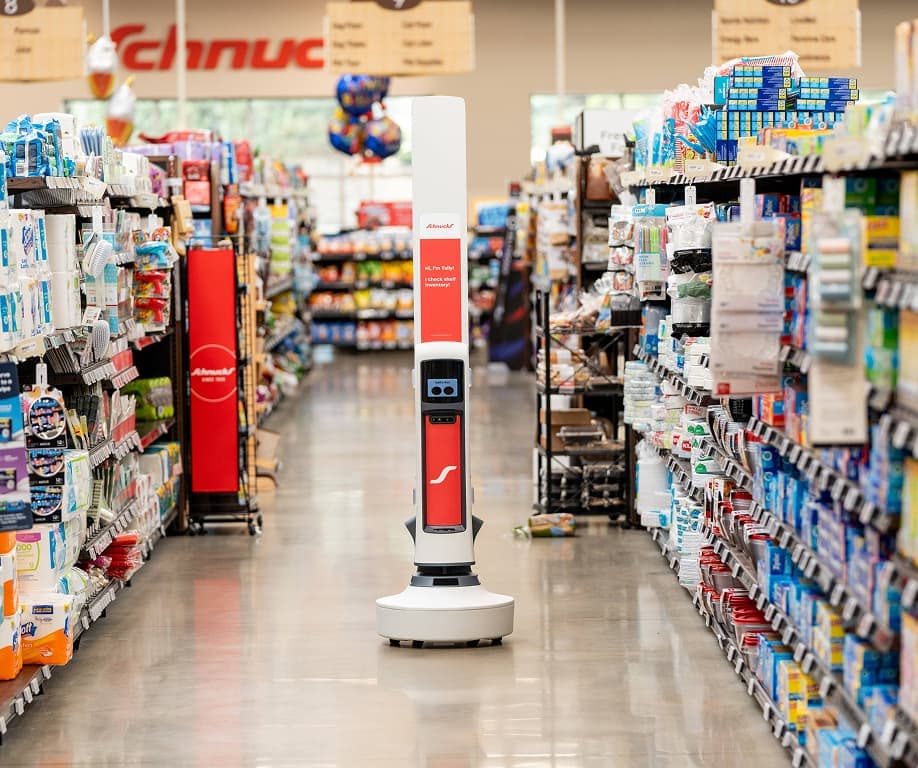
- How Simbe Solves Phantom Inventory: Simbe’s autonomous shelf-scanning robot, is purpose-built to close the gap between system records and shelf reality.Tally scans store shelves multiple times a day, using computer vision to capture images of every shelf. Discrepancies, including out-of-stock products, misplaced items, and phantom inventory flags, are surfaced giving store teams a prioritized task list.
What Tally detects:
- Products recorded as in stock but physically absent from the shelf (phantom inventory)
- Out-of-stock items and low-stock conditions before they impact shoppers
- Misplaced products that cause system miscounts
- Pricing label discrepancies that contribute to inventory record errors
Store associates receive alerts tied to specific shelf locations, so time is spent correcting problems rather than searching for them.
Choosing the Right Solution
Selecting the right technology to tackle phantom inventory requires asking the right questions. Here are a few critical ones to consider:
- Is your business ready to support innovation? Implementing advanced solutions like computer vision requires a culture and infrastructure prepared for change. Make sure your team is ready to integrate and fully leverage new technologies.
- How does the ROI fit into your business goals? Any technology investment should deliver measurable returns, such as improved inventory accuracy or increased sales. Understanding how the ROI aligns with your specific objectives is crucial.
- How fast is the setup, and when will you see value? Time to value is key. Look for solutions that can be up and running quickly, offering benefits without long delays or complex implementation processes.
Simbe’s platform meets all these criteria, providing a proven, scalable solution that delivers fast ROI and seamless integration. The platform's proven ROI has made it a trusted solution for top retailers: “The solution pays for itself many times over,” is a common piece of feedback, which highlights Tally’s impact on better stock management and increased sales.
With years of satisfied customers and successful deployments across hundreds of locations, Tally offers the reliability and impact that retailers need to transform their inventory management. Retailers consistently see measurable results with Tally, including improved inventory accuracy, reduced out-of-stock instances, and enhanced operational efficiency.
A New Era of Inventory Management
Phantom inventory presents a significant challenge for retailers, but it is one that can be effectively addressed with the right tools. Understanding the root causes is crucial; and merely identifying these issues is not enough. Retailers must adopt advanced, data-driven solutions to prevent phantom inventory from eroding their profitability.
With Simbe’s Store Intelligence™ platform, retailers gain the visibility needed to take control of their inventory. The near-real-time insights Tally provides allow retailers to bridge the gap between system records and the actual state of their shelves. As a result, phantom inventory is reduced, sales opportunities are maximized, and customer satisfaction improves.
As the retail industry continues to evolve, embracing technology is essential to staying competitive, improving operational efficiency, and driving long-term growth.
FAQs
What is the difference between phantom inventory, out-of-stock, and shrink?Phantom inventory occurs when a system shows an item as in stock, but it is missing from the shelf. Out-of-stock (OOS) means the system correctly reflects that the item is unavailable. Shrink refers to inventory loss from theft, damage, or expiration. Phantom inventory is often caused by shrink or process errors, but unlike OOS, it is invisible to the system and prevents replenishment.
How do robots detect phantom inventory?Autonomous shelf-scanning robots like Tally use computer vision to scan shelves multiple times per day and compare images against inventory records. When a product is listed as in stock but not physically present, the system flags it as phantom inventory in near real time.
How accurate is automated shelf scanning, and how often does it run?Computer vision systems typically achieve high accuracy (Simbe Vision delivers 99% shelf label identification accuracy) and scan shelves multiple times daily. This enables retailers to identify and resolve phantom inventory within hours instead of weeks.
What are the technology or infrastructure requirements for in-store robots?Solutions like Tally operate within existing store environments using standard Wi-Fi and integrate with current inventory systems. They are designed for enterprise security and do not require major infrastructure changes.
How quickly can retailers see value from robot deployment?Retailers often begin seeing results within days. By surfacing discrepancies immediately, these systems quickly improve inventory accuracy, on-shelf availability, and labor efficiency. With Simbe’s Store Intelligence platform retailers have achieved 98% on shelf availability, 90% improvement in pricing accuracy, and up to 50 hours per store per week rededicated to shoppers.

Simbe
![[On Demand] Real Talk | What Using Robots in Retail Stores is Really Like](/_next/image?url=https%3A%2F%2Fcdn.sanity.io%2Fimages%2Foh42c9n6%2Fproduction%2F8cb019fe8c1a0e3317a85dfff2d95fad7fc5038a-3240x1700.png&w=3840&q=75)