
Why Humanity Matters Most in Retail Technology: A Conversation with Bennett Morgan

Caitlin Allen
Bennett Morgan has spent his career at the center of retail transformation. From early roles in merchandising and store operations to leadership positions at H-E-B, Walmart in China and Japan, Amazon Fresh, and most recently as EVP and Chief Merchandising Officer at SpartanNash, Bennett brings a rare, end-to-end view of how retail organizations operate and evolve. He has also advised retailers for years through Boston Consulting Group, where he recently rejoined as an executive-in-waiting senior advisor, and he now serves on Simbe’s Strategic Advisory Board.
In this fireside chat, Bennett reflects on what has fueled his passion for retail, how leaders should think about AI and operational complexity, and why humanity—not technology alone—will ultimately determine who wins in retail’s next chapter.

Caitlin Allen
SVP, Market
Caitlin Allen is SVP of Market at Simbe, where she leads brand, communications, and commercial strategy, and chairs Simbe's Strategic Advisory Board. She brings almost 20 years of experience scaling market-defining technologies from startup to IPO, including senior marketing roles at Lyft, Happy Returns, and Andreessen Horowitz.

“At the end of the day, this is about humanity. That’s what makes people want to be part of something.”
Q (Caitlin): You’ve led transformations across merchandising, store operations, and supply chain at some of the world’s largest retailers. What has driven your passion for retail transformation?
A (Bennett): I’ve always loved the consumer orientation of retail. Like a lot of people, I started my career in retail. My first job was at Sunglass Hut, then Abercrombie & Fitch, and I loved that connection with customers and trying to solve their needs.
Over time, I gravitated toward food retail in particular. Food sits at the intersection of culture, community, and necessity. It brings people together. It’s also incredibly complex operationally, but filled with great people and strong cultures. Retail transformation is hard work, but it’s fast-moving, meaningful, and deeply human. That’s what’s always drawn me to it.
Q: What retail trends are most top of mind for leaders today?
A (Bennett): Two things stand out. First is AI. It’s gone from being an interesting topic to something every CEO and board needs to be talking about. If AI isn’t part of your strategy conversation today, that’s a real issue.
The second is cost pressure, driven by lingering effects from COVID and inflation. That pressure is forcing organizations to rethink how they operate, how they organize teams, and how they get more efficient.
That said, none of this changes the fundamentals. You still have to start with the customer. If you’re not laser-focused on making things better for customers and the associates who serve them, it’s going to be very hard to win, no matter how advanced your technology is.
Q: How has your perspective shifted now that you’re advising retailers rather than operating inside one?
A (Bennett): When you’re in an operator role, there’s an incredible amount coming at you every day. It’s not just about time, it’s about managing your energy so you can show up effectively.
As an advisor, you’re a bit removed from that pressure, which allows you to see patterns more clearly. You can often spot things that are harder to see when you’re in the seat. But the role is different. You want to roll up your sleeves and fix things, and that’s not always your job.
The real value is helping leaders set themselves up for success. You need enough context to be helpful, but you can’t insert yourself into execution. It’s about enabling others, not doing the work for them.
Q: There’s a lot of excitement around AI. How should retailers be thinking about it realistically?
A (Bennett): I’m much more optimistic about augmentation than replacement. I don’t think technology replacing people is the right strategy, and I think it’s a lot harder than many expect.
We’ve already seen companies lean into AI without being able to show real value. Often that’s because the fundamentals aren’t in place. If your processes aren’t clear or your data isn’t clean, technology will only take you so far.
The real opportunity is using technology to make the work better, to free people up from low-value, repetitive tasks so they can focus on things that improve customer and associate experience. That’s where the value is.
“I believe a lot more in augmentation than replacement. Technology should make the work better.”
Q: Within stores specifically, what role does shelf digitization play in unlocking better decision-making?
A (Bennett): For a long time, retail has relied on inference when it comes to the shelf. We know when product arrives and when it sells, but we don’t truly know what’s happening at the shelf, which is the most important point of customer decision-making.
Perpetual inventory doesn’t tell you what matters to the customer, which is what’s actually on the shelf. Digitizing that last frontier changes everything. When you have high-confidence shelf data, you can make better decisions upstream across merchandising, supply chain, and store operations.
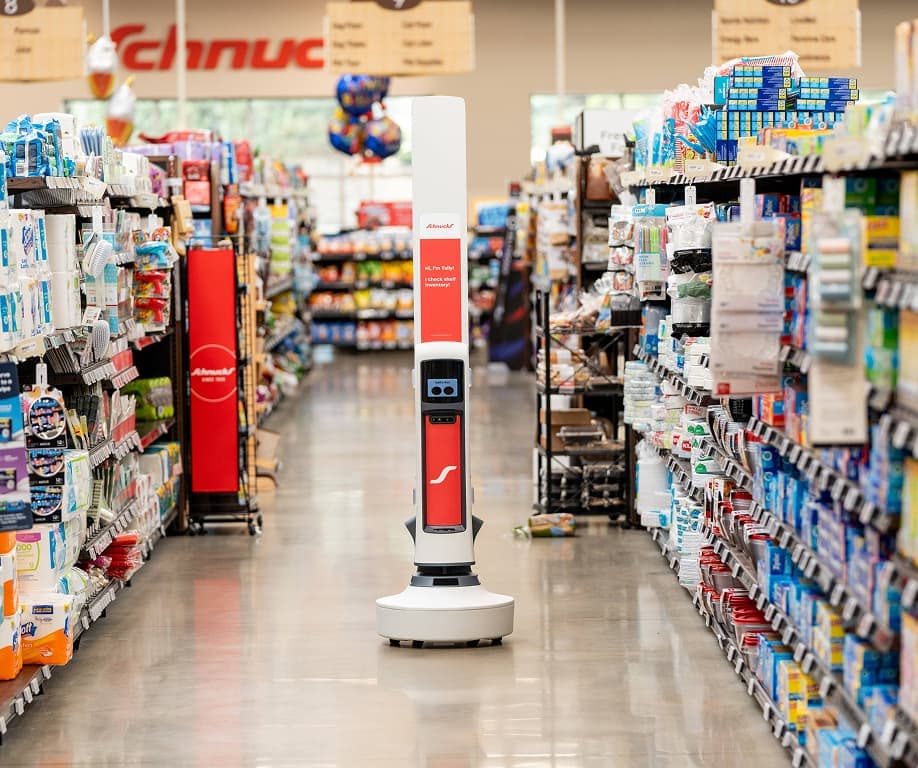
What really impressed me about Simbe is that it didn’t just promise insight, it worked. You could put a robot in a store, pull up a store map, and actually trust what you were seeing. That reliability is rare, and it’s what makes shelf intelligence actionable.
Q: How does an intelligent shelf change the future of merchandising?
A (Bennett): Merchants spend too much time firefighting. The future is about shifting from reacting to issues to identifying patterns and anticipating what’s coming next.
When shelf data is digitized and accessible, merchants can stop triaging individual store problems and start asking bigger questions. Where are issues repeating across stores? Is there a supply chain problem upstream? Are assortments right for specific communities?
The goal is to get merchants thinking about where the puck is going, not where it is today. Shelf intelligence helps create that shift by freeing them from low-value work and giving them confidence in the data they’re using.
Q: How does shelf intelligence change collaboration with vendors and partners?
A (Bennett): Execution matters deeply to vendor partners. Brands want to work with retailers who can execute reliably.
When you have confidence that a planogram is executed and products are actually on shelf, you can collaborate differently. You can tailor assortments at the community level and prove execution with data. That builds trust.
It also changes how decisions are made internally. Shelf data provides an objective, high-confidence signal that different teams can align around. That’s incredibly powerful for enterprise-level decision-making.
Q: You’ve joined Simbe’s Strategic Advisory Board. What motivated that decision?
A (Bennett): At the end of the day, I want to work with great people who are passionate about what they do and who genuinely partner with their customers.
Simbe isn’t about selling robots. It’s about solving a real problem that retail hasn’t been able to measure before. The shelf is the most important part of the customer interaction, and Simbe is bringing visibility there in a way that’s authentic and effective.
It’s not smoke and mirrors. It’s real technology, real partnership, and real impact on customers and associates. That’s why I wanted to be involved.
Q: If you could leave retail leaders with one message looking ahead, what would it be?
A (Bennett): I think about something Judith McKenna once said when she was leading Walmart International. She said what makes Walmart special is its humanity.
Technology matters. AI matters. Process matters. But humanity is what gets people out of bed in the morning and makes them want to be part of something.
If we can use technology to make work better, improve customer experience, and help people succeed, that’s where real progress happens. Don’t lose sight of that.
![[On Demand] Real Talk | What Using Robots in Retail Stores is Really Like](/_next/image?url=https%3A%2F%2Fcdn.sanity.io%2Fimages%2Foh42c9n6%2Fproduction%2F8cb019fe8c1a0e3317a85dfff2d95fad7fc5038a-3240x1700.png&w=3840&q=75)