
Shelf Digitization Without Added Complexity

Dave Steck
What is the most effective way to digitize the shelf?
The most effective approach to shelf digitization is a multimodal store intelligence platform, with autonomous mobile robots providing broad, scalable data capture and fixed cameras adding targeted visibility where continuous monitoring creates incremental value.
A few months ago, I wrote about the importance of getting the basics right in grocery retail.
The premise was simple: shoppers don't care how advanced your technology stack is if they walk into a store and can't buy the item they want. Empty shelves, pricing errors, and poor execution still undermine shopper trust faster than any innovation can restore it.
While store teams work incredibly hard, they're often operating in an environment defined by labor constraints, turnover, and constant competing priorities. That reality makes consistent execution difficult and leaves little time for the foundational tasks that keep shelves accurate, available, and shopper-ready.
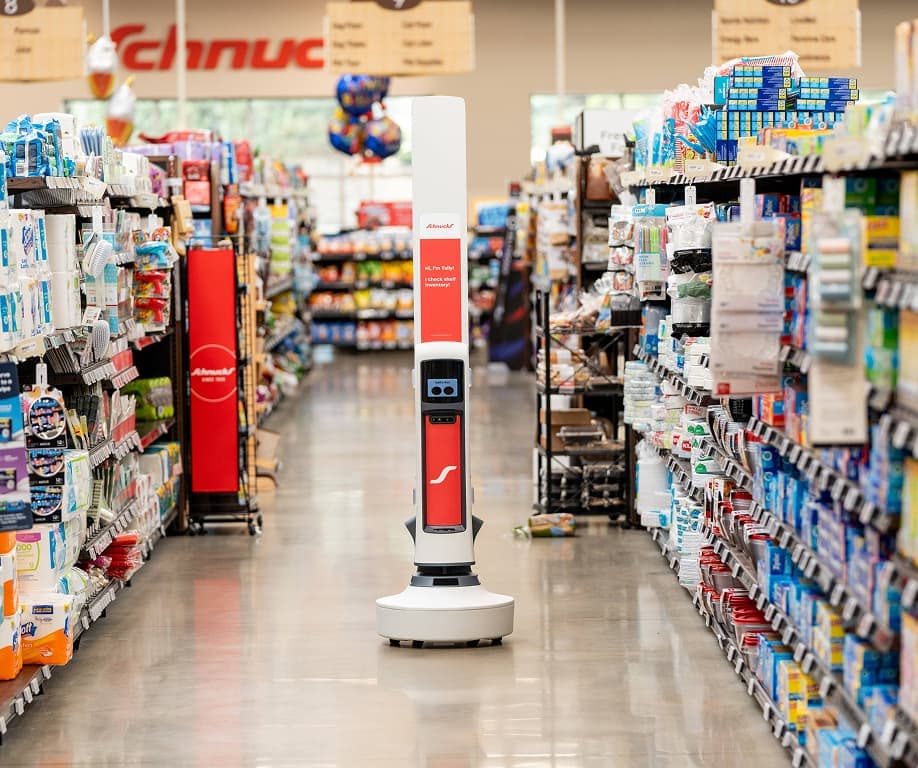
This is why shelf digitization solutions like Simbe's Tally have become such an important part of modern retail operations. They provide retailers with a consistent, reliable source of truth about what's happening on the shelf, allowing teams to focus their time where it matters most.
As retailers continue investing in store intelligence, the real question is not whether to digitize the shelf, but how to do it in a way that scales.
The Debate Around Shelf Digitization
Recently, I've noticed increased discussion around shelf-edge cameras as a path to shelf digitization.
It's a topic I've explored extensively during industry events including Groceryshop, FMI, and GroceryTech.
The promise is understandable. If retailers could place cameras throughout the store and continuously monitor shelves, they could theoretically create a digital representation of in-store conditions.
After years of evaluating retail technology deployments, I believe retailers should ask a more important question:
How do I get the results I need without creating new operational burdens?
Shelf-edge cameras can be highly effective in targeted applications, particularly in areas where continuous monitoring delivers incremental value. But when retailers begin thinking about digitizing an entire store, operational considerations become just as important as technical capabilities.
This is where autonomous mobile robots provide a distinct advantage. Rather than requiring infrastructure across thousands of shelf locations, they deliver broad store coverage through a single, managed solution that removes the burden of manual shelf scanning while minimizing additional work for store teams.
When paired with targeted shelf-based technologies for specific use cases, retailers gain the benefits of a multimodal approach without creating unnecessary complexity for store operations or IT teams. The result is a more scalable path to shelf digitization and a stronger foundation for store intelligence.
Avoiding Complexity in Shelf Digitization
Many people are familiar with the term "Rube Goldberg machine", an overly complicated system designed to accomplish a relatively simple task.
The lesson applies surprisingly well to retail technology.
As systems become more complex, they become harder to maintain, troubleshoot, and scale. Every additional device, connection point, mounting location, and dependency introduces new opportunities for failure.
Retail environments are already dynamic and unpredictable. The best technologies simplify operations rather than adding new layers of complexity.
That's why I've always believed retailers should prioritize solutions that reduce variability and minimize operational burden.
The Reality of Shelf-Edge Infrastructure
The shelf edge is one of the most active environments in the store.
Associates stock products on it. Merchants attach signage and promotional materials to it. Customers lean on it, bump into it, and move products around it. Planograms change. Resets happen. Displays come and go.
In other words, it's rarely static.
Any technology deployed directly on the shelf edge must operate within that reality.
At scale, that raises important operational questions:
- How are devices maintained across thousands of shelf locations?
- What happens when cameras are blocked, moved, damaged, or obscured?
- How are resets, remodels, and merchandising changes managed?
- Who is responsible for ongoing troubleshooting and support?
And in retail, operational realities ultimately determine whether a solution succeeds.
Why Autonomous Mobile Robots Create a Stronger Foundation
This is where I see a fundamental advantage in autonomous mobile robots (AMRs).
Rather than deploying thousands of fixed devices across the store, AMRs move through the environment, adapting to changing conditions while capturing comprehensive shelf data.
The result is a simpler and more scalable model for store digitization.
A mobile robot can inspect shelves, identify out-of-stocks, detect pricing discrepancies, verify planogram compliance, and provide visibility across the majority of the store, all without requiring extensive infrastructure attached to every shelf.
More importantly, it creates a trusted foundation of store intelligence that can be operationalized by store teams.
At Schnucks, one of the reasons robotics delivered value at scale was because the solution fit naturally into existing retail operations. It provided actionable insights without creating an entirely new layer of infrastructure to manage.
That's an important distinction. The goal isn't to collect more data, it's to create reliable visibility that drives action.
The Future Is Multimodal, Not One-Dimensional
Certain use cases are well suited for fixed cameras, particularly when they are layered on top of a broader store intelligence foundation powered by robotics, real-time shelf visibility, and the operational accuracy required for omnichannel commerce.
Asset protection teams may want continuous monitoring in high-shrink categories. Prepared foods departments may benefit from targeted visibility into execution and availability. High-value merchandising zones may warrant additional observation.
The key is understanding that these technologies work best when they complement a broader store intelligence strategy rather than attempting to replace it.
That's why I believe the future belongs to multimodal platforms.
AMRs can provide comprehensive visibility across the store while fixed cameras, sensors, point-of-sale data, and other technologies contribute targeted insights where they add the most value.
Retailers need the right combination of technologies working together to create a complete and actionable view of store conditions. The most effective strategies use each technology where it delivers the greatest operational value.
Building the Store Intelligence Platform Retailers Need
Shelf digitization is undoubtedly the future of retail. But success depends on building that foundation in a way that is scalable, maintainable, and operationally sustainable.
In my experience, the best technology strategies start with simplicity. Retailers should prioritize solutions that strengthen execution, create trusted visibility across the store, and drive measurable business outcomes.
That's why a multimodal approach, anchored by AMRs as the primary data capture layer and complemented by targeted technologies where they add value, is the most practical path forward. The objective is simple: deliver actionable store intelligence without creating additional operational burden.

Dave Steck
President, Steck Consulting, LLC | Simbe Expert in Residence
Dave Steck is President of Steck Consulting and serves as Simbe's Expert in Residence. He spent 11 years as VP of IT & Innovation at Schnuck Markets, where he led the grocer's rollout of Tally, making Schnucks the first grocery chain to deploy in-store robotics at scale. He now writes and speaks frequently on shelf digitization, store execution, and the operational realities of scaling in-store automation, including at Groceryshop, FMI, and GroceryTech.
![[On Demand] Real Talk | What Using Robots in Retail Stores is Really Like](/_next/image?url=https%3A%2F%2Fcdn.sanity.io%2Fimages%2Foh42c9n6%2Fproduction%2F8cb019fe8c1a0e3317a85dfff2d95fad7fc5038a-3240x1700.png&w=3840&q=75)