
The Future of Independent Grocery: Key Takeaways from NGA 2026

Lexie (Sirak) Myers

At NGA 2026, a main stage conversation titled The Future of Independent Grocery: Fresh Thinking, Smart Tech, and Strong Partnerships brought together some of the industry's most seasoned operators to talk about how independent grocers are winning today.
Moderated by Thom Blischok, Chairman & CEO of The Dialogic Group, the panel featured:
- Jeffrey Strack, President & CEO, Strack & Van Til
- Tye Anthony, Chief Merchandising & Marketing Officer, Associated Wholesale Grocers
- Ben Norton, Director of Information Technology, McCaffrey's Food Market
- Dave Steck, President & Founder, retired VP of IT, Schnuck Markets)
The practical conversation was grounded in real operational experience. Below are the themes that defined the discussion.
Technology's Job Is to Give Retail Teams Superpowers
"It always starts with people," said Jeffrey Strack. "Making sure we have the right people in the right spots in our organization who can execute our plans effectively."
That set the tone. The panel's most actionable framework came from Dave Steck: automate the hate.
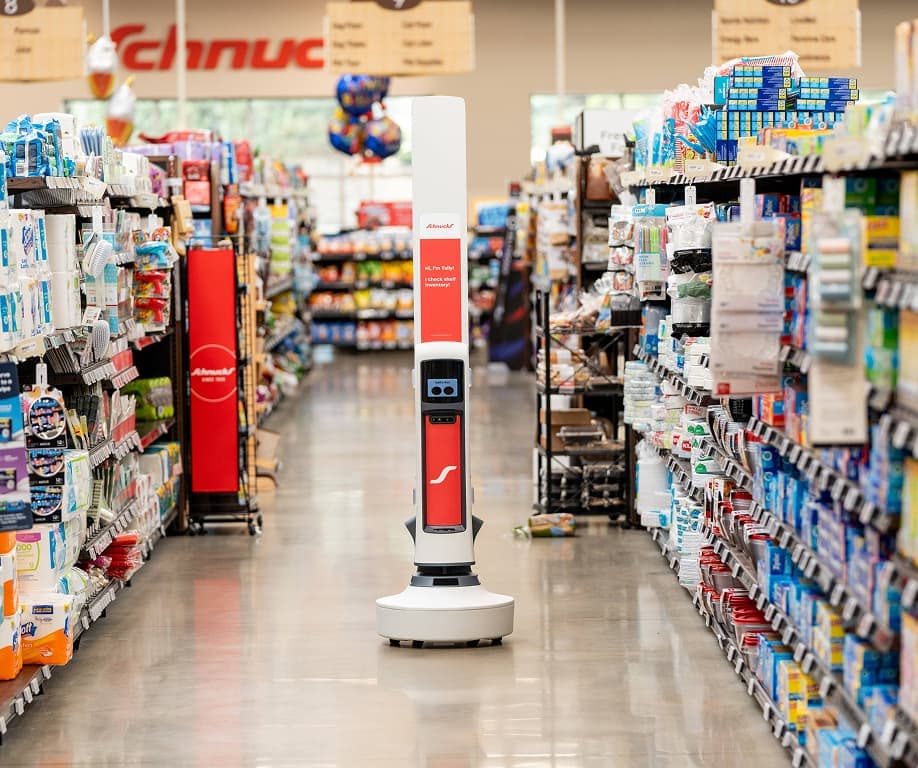
"There are things that store teams just hate doing—redundant, repetitive activities," he said. "Schnucks led the industry on in-store robotics, and that was the whole idea: get store teammates away from manual counts. It wasn't like we were going out to cut hours—it was about getting rid of the stuff that doesn't take a person to do it. That enriches the customer experience, because store teammates are free for that."
Ben Norton brought the same philosophy to McCaffrey's. "We want to show our employees that they're going to be more efficient—that we're going to take the part of the job they hate and automate it." McCaffrey's is using robots and electronic shelf labels to surface out-of-stocks, flag pricing discrepancies, and redirect associate time toward customers.
The through-line from both operators: technology earns its place when it makes the team more effective and the shopper experience better. Not one or the other—both.
What Actually Exceeded Expectations in 2025
Blischok asked the panel directly: what technology or initiative actually exceeded your expectations?
For Ben Norton, the answer was immediate:
"For us, it was the Tally robot. It's really exceeded our expectations. Our employees have really bought into it. They're seeing that they're missing holes on the shelves, where our shelf tags have the wrong prices—we're being more efficient with stocking and putting product on the shelves for our customers."
Dave Steck pointed to a similar arc at Schnucks, where in-store robotics laid the groundwork for what came next: AI-driven, loyalty-based targeted marketing. "Once you get to know that customer, understand their patterns, and put an AI engine behind it, the marketing becomes very targeted and very personal. These things are really working."
Technology that starts with shelf-level accuracy creates a data foundation that keeps paying dividends well beyond the initial use case.

Build the Foundation Before You Build the Future
A consistent warning ran through the technology conversation: don't chase the shiny object before the basics are solid.
"Don't put a Lamborghini on a dirt road," said Steck. "Good network, good Wi-Fi, handhelds that work—get that infrastructure in place first. You will fail if the foundation isn't right."
On AI specifically, Anthony relayed a point that resonated with the room: "Don't try to eat the elephant all in one night. Take little pieces, make wins, then go on to the next win." The retailers gaining ground aren't doing everything at once—they're stacking focused wins.

Data Is the New Shelf
Blischok made an observation worth writing down: data is the new shelf.
Whether it's physical retail, digital retail, or agentic commerce, the ability to collect, share, and act on accurate data is now a competitive baseline—not a competitive advantage.
Tye Anthony reinforced the point from AWG's perspective. Vendors who are actively using shared data are consistently outperforming those who aren't. "There's a lot of trust factors that still have to be overcome," he said. "But we're headed into a world where more collaboration is the key to competition—and we have to be willing to do our part."
The panel identified trust as the central obstacle to meaningful collaboration across the retailer–wholesaler–supplier ecosystem—and agreed it's a challenge that isn't going away. The independents who crack it first will have a meaningful edge.
The Independent Advantage Is Real
The panel pushed back on any narrative that independent grocers are outmatched. What sets independents apart—local expertise, community trust, personalized service—is exactly what large chains can't manufacture. Technology amplifies it.
"Find ways to use technology that help our people become the experts in our stores," said Strack. "Our produce people need to be the experts. Our deli people need to be the experts. And we're out in the communities, day in and day out. That makes a real difference."
Anthony framed the winning formula plainly: "I can line up the retailers who grew last year. What separates them is tying good technology to what they already do really well."
As Strack closed: "We sell stuff on shelves and in cases. But the independent grocer helps make the communities we serve a better place to live. We can't lose sight of that."

See It in Practice
The themes from NGA 2026—people, shelf accuracy, and real-time data—begin with one step: making the shelf measurable.
See how retailers are applying real-time shelf intelligence across store operations, merchandising, and digital commerce.

Lexie (Sirak) Myers
Growth Marketing Manager
Lexie (Sirak) Myers leads Growth Marketing at Simbe, focused on demand generation, SEO/AEO, and content performance. She brings prior marketing and analytics experience from roles at Nitrogen, OpenComp, and JPMorgan Chase & Co.
![[On Demand] Real Talk | What Using Robots in Retail Stores is Really Like](/_next/image?url=https%3A%2F%2Fcdn.sanity.io%2Fimages%2Foh42c9n6%2Fproduction%2F8cb019fe8c1a0e3317a85dfff2d95fad7fc5038a-3240x1700.png&w=3840&q=75)