
When the Shelf Breaks, So Does the Retail Business

Caitlin Allen
Every retailer knows the feeling: We’ve got the people. We’ve got the processes. We’ve invested in the platforms.
And still—something breaks down on the shelf.
… A key item is out of stock.
… A promotion doesn’t go live.
… A shopper walks out empty-handed.
Not because of bad intent. But because of bad visibility.
Even at the most sophisticated companies, teams are forced to make high-stakes decisions with incomplete, outdated, or disconnected information about what’s happening in stores.
And by the time someone spots the issue, it’s already cost the business the sale or the shopper’s trust.
The Problem Isn’t Process. It’s the Cost of Not Knowing.
Manual processes and disconnected systems aren’t just inefficient; they’re unreliable. And when teams are relying on clipboards, handheld audits, or gut feel, the consequences compound.
At Simbe, we’ve seen this play out over and over, even at well-run, forward-thinking retailers.
🛒 Schnuck Markets
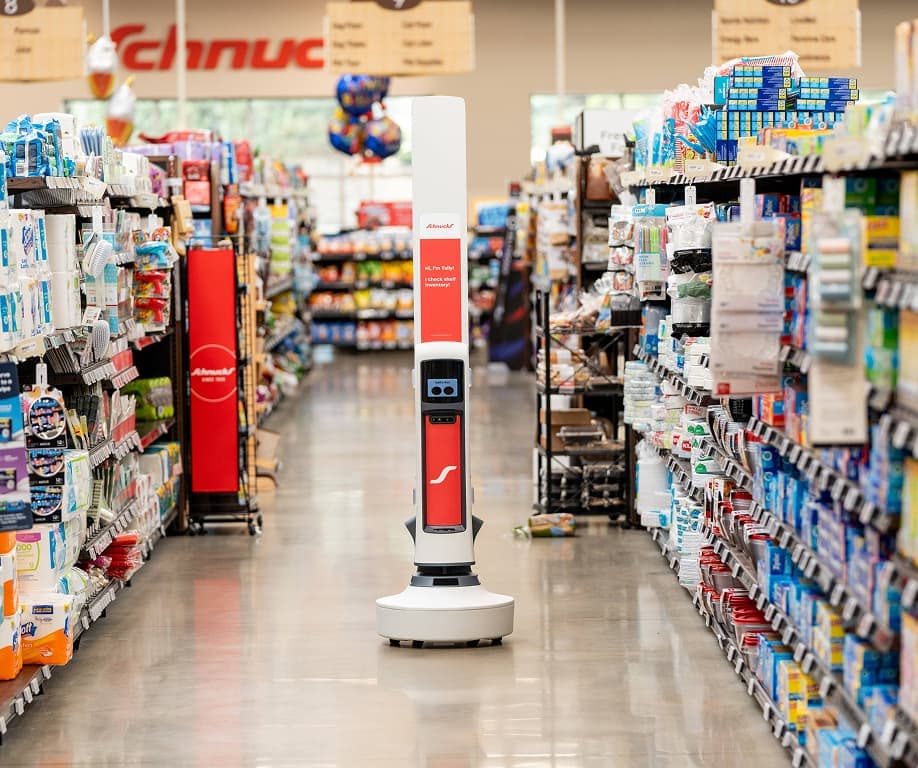
This leading regional grocer considered their in-stock position strong until they deployed Simbe during a pilot phase.
“During the experimentation process, we found that Tally was discovering anywhere from 4X to 10X the number of out-of-stocks on the shelf than we initially expected.”
— Dave Steck, Former VP of IT, Schnuck Markets
In other words: they didn’t know what they didn’t know.
📦 SpartanNash
For this national grocer and distributor, the problem wasn’t awareness; it was manual burden. Store teams spent 2.5 hours per day scanning shelves to identify holes and build reorder lists.
“Labor shortages are still the number one reason why internally, we [were] having trouble getting product to the floor. So [we wanted to figure out] how to deploy technology to get those products out there—what we call the addressable out-of-stocks.”
— Tyler King, VP Finance, SpartanNash
What they found? Many of the “missing” items weren’t actually out of stock, they were just misplaced or sitting in the backroom. Lost sales, for no good reason.
These stories are not outliers. They’re a reflection of an industry that’s still trying to operate in the dark without the visibility needed to execute reliably at scale.
It’s Not About Catching Mistakes… It’s About Avoiding Them Entirely
When retailers lack real-time shelf data:
- Teams make assumptions
- Small errors go unnoticed
- Friction builds between departments
- Shopper trust takes the hit
And these misses add up. Daily. Across every store.
That’s why shelf intelligence matters. It doesn’t just catch issues; it prevents them.
It gives retailers the confidence that what’s supposed to be happening in-store actually is.
Because today’s shoppers don’t care what went wrong behind the scenes. They care whether the product was there, priced right, and available when they needed it.
Why This Matters Now
The market is too competitive—and the stakes too high—to rely on reactive fixes. Retailers need proactive visibility. They need to move from chasing problems to orchestrating outcomes. They need to go from gut feel to ground truth.
That shift is already underway at some of the world’s leading retailers—and it’s changing what’s possible.
The Bottom Line
Even the best-run stores can’t deliver consistently if they can’t see what’s on their shelves. Even the most capable teams can’t win if they’re flying blind. Even the smartest strategies can’t succeed if the shelf isn’t part of the system.
That’s why visibility isn’t a nice-to-have, it’s a growth lever
And it starts with a simple question: Do we actually know what’s happening in our stores, right now?
Next in the series: From Ground Truth to Growth
Download the report: The State of In-Store Retailing 2025

Caitlin Allen
SVP, Market
Caitlin Allen is SVP of Market at Simbe, where she leads brand, communications, and commercial strategy, and chairs Simbe's Strategic Advisory Board. She brings almost 20 years of experience scaling market-defining technologies from startup to IPO, including senior marketing roles at Lyft, Happy Returns, and Andreessen Horowitz.
![[On Demand] Real Talk | What Using Robots in Retail Stores is Really Like](/_next/image?url=https%3A%2F%2Fcdn.sanity.io%2Fimages%2Foh42c9n6%2Fproduction%2F8cb019fe8c1a0e3317a85dfff2d95fad7fc5038a-3240x1700.png&w=3840&q=75)